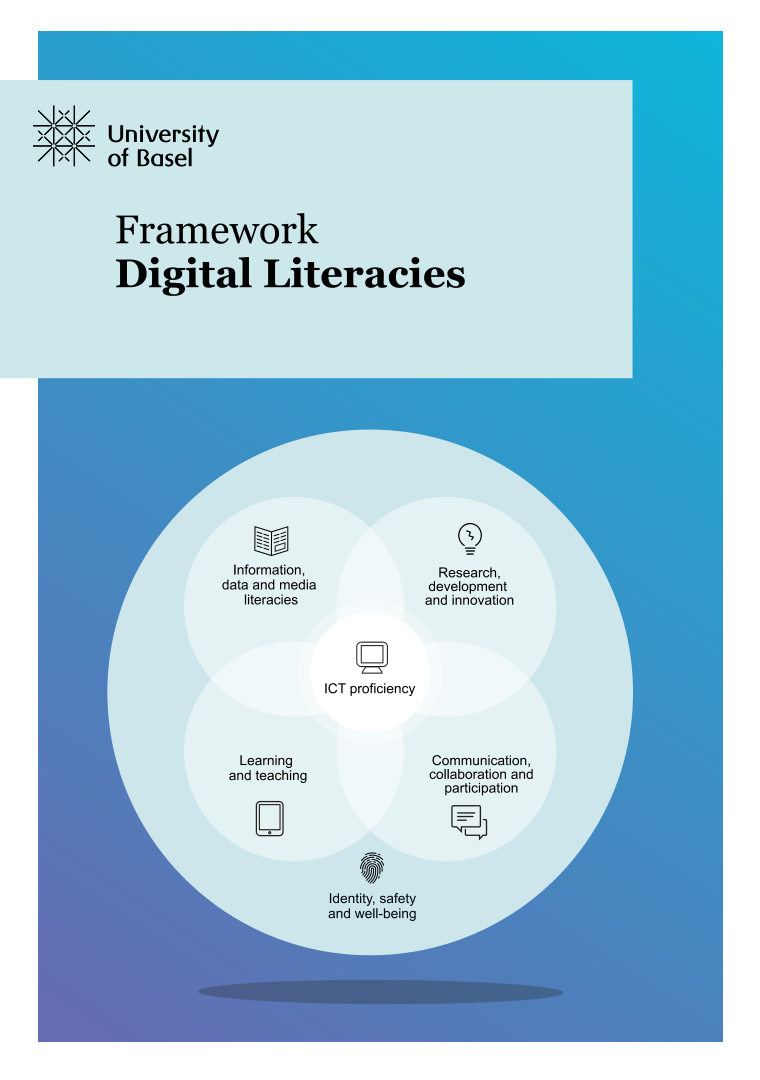
Literacy area 5
Learning and teaching
Digital technology offers new possibilities for learning and teaching. The creation and distribution of learning materials, including in multimedia-rich formats, is easier and less costly. The communication between teachers and students, as well as the communication among students, is faster, easier and more flexible. All this enables new forms of learning, new forms of tutoring and coaching, and new forms of evaluation.
Digitally competent learners know their individual needs and learning preferences and are thus capable of using digital tools, platforms and methods, including AI-based ones, effectively and responsibly to achieve learning objectives.
Teaching effectively in digital environments means having the capacity to make use of digital tools and resources, including generative AI where appropriate, to convey content and support learning. This requires an understanding of different educational approaches and their application in digital settings, as well as an awareness of the opportunities offered by digital technology to re-design courses and assessments. Equally relevant for both digital learners and teachers is the capacity to assess the impact of digital tools, including AI-based ones, on learning, both positive (peer learning, AI-supported feedback and testing, etc.) and negative (e. g. distraction or deskilling).
Digital technology also makes it easier to search for, re-use, and share learning and teaching materials, in the spirit of open education.
Concretely, literacy in digital learning is the capacity to:
- adopt, and where necessary adapt, digital applications, platforms and services for learning, including AI-based tools where appropriate
- manage time and tasks, attention and motivation to learn in digital settings
- participate in learning dialogues via digital media, either with other students or with teaching staff
- identify and use reliable digital learning resources
- effectively participate in digital assessments and receive digital feedback.
Concretely, literacy in digital teaching is the capacity to:
- adopt, and where necessary adapt, digital applications, platforms and services for teaching, including AI-based tools where appropriate, to organize, plan and reflect on teaching
- use digital tools to teach and evaluate students, both individually and in teaching groups
- support and facilitate learning in digital settings, in particular by creating digitally-rich content, providing regular feedback and supporting peer learning
- create new learning opportunities and enhance the digital skills of learners, including AI skills
- design courses and assessments for different modes of learning (e. g. selfdirected, blended, hybrid, high-flex)
- find, use and share/recommend good digital teaching materials, including Open Educational Resources.