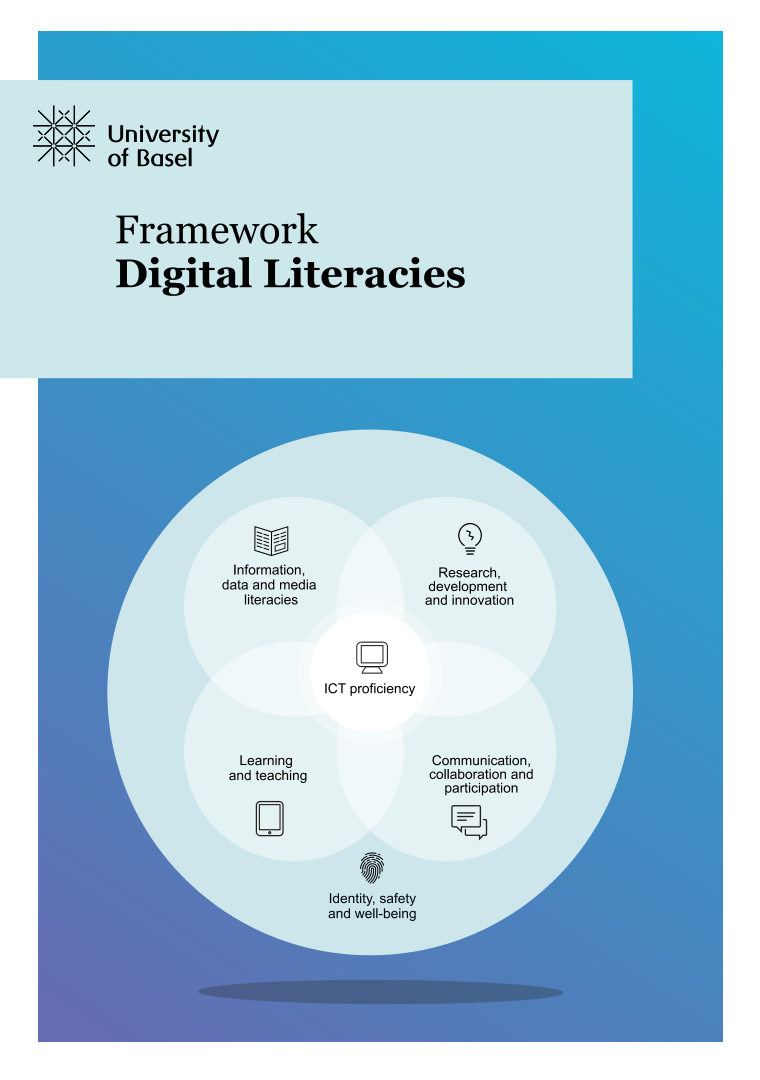
Literacy Area 1
General ICT proficiency
Proficiency in Information and Communication Technologies, or “ICT proficiency” for short, stands for the practical and technical skills that are needed to effectively pursue goals in digital environments. It means being able to select and operate hardware (devices), software (applications), and services (such as web platforms). Practical digital skills are the basis on which other digital capabilities are founded.
An understanding of basic concepts in computing, coding and information processing; an understanding of how digital technology is changing practices at work, at home, in social and in public life; and lastly a capacity to think critically about technology – in other words to critically assess technological developments – are also components of digital proficiency. The relevance of critical thinking increases in the case of disruptive technologies such as AI (Artificial Intelligence).
Concretely, general digital proficiency means the capacity to:
- use digital devices, applications, platforms and other online services, including AI-based, to carry out tasks effectively, safely and with attention to quality
- choose devices, applications and services relevant to different tasks, having assessed their benefits and constraints
- adopt, and where necessary adapt, digital tools to meet personal requirements, such as ways of working or accessibility
- deal with problems and failures of ICT when they occur, and find, design and implement solutions
- stay up to date with digital developments.