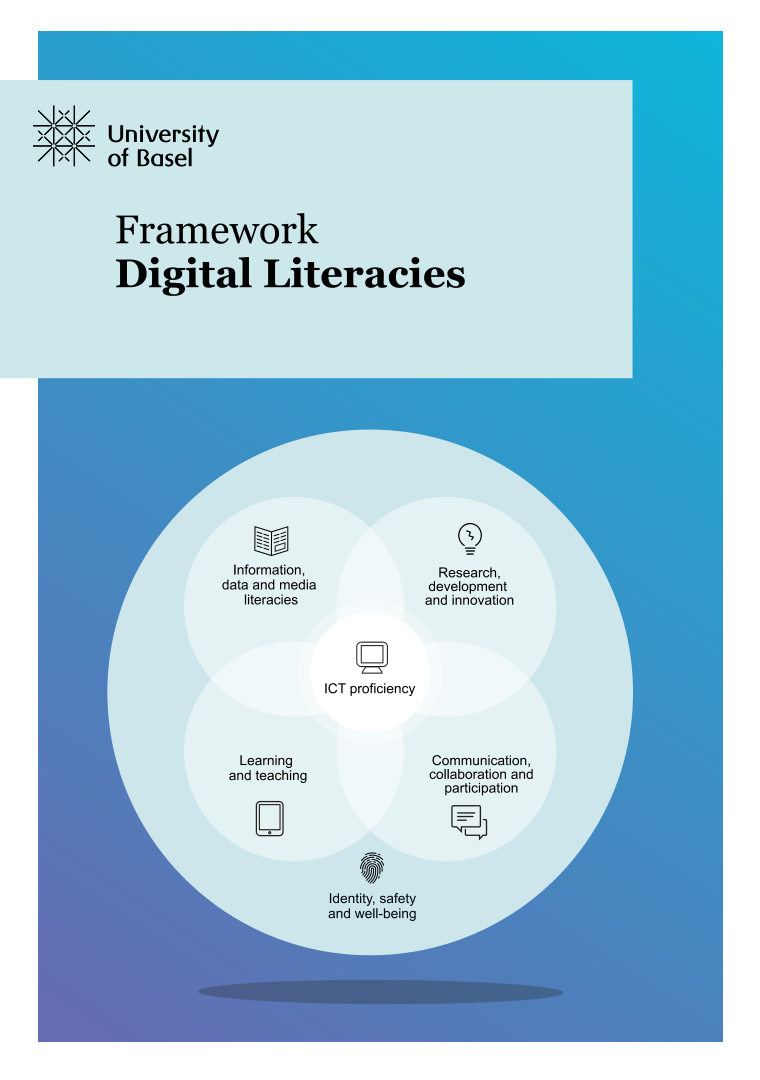
Literacy area 3
Research, development and innovation
In the age of digital multimedia, it becomes easier to access information in multiple formats. In the same way, with digital tools and techniques, new possibilities emerge for the production, transformation, and dissemination of data and information.
Digital literacy in this area means, first, knowing the tools and techniques that help produce and transform digital artefacts with attention to quality (content in various media, instructions to machines in the form of prompts, scripts or programs, etc.).
It also means a capacity to use technology creatively to support new forms of research and innovation. In particular, digitalization and especially new AI-based tools help automatize many tasks, including content creation, data analysis, and coding. They can also support remote collaboration, thereby providing further opportunities for collective approaches to research and problem solving (e. g. international collaboration, open science, citizen science, open innovation).
Concretely, literacy in digital research and problem-solving means the capacity to:
- find and use digitally available evidence to solve problems and answer questions
- collect, collate, evaluate, analyze and interpret new evidence, including using AI-based tools
- share evidence and findings using digital methods and applications, all while applying the principles of academic integrity and data protection.
Literacy in the area of development and digital creation means the capacity to:
- design, create, transform and edit new digital content such as writing, imaging, audio and video, or code (e. g. web pages, scripts, apps)
- use appropriate tools, including AI-based ones, safely and effectively to create and transform content (text, code, image, audio, video, animation)
- pay to attention to technical and intellectual accessibility when producing digital content.
Literacy in digital innovation means the capacity to:
- use digital technologies when developing new ideas, projects and opportunities
- assess opportunities, benefits and risks of new digital applications (including generative AI), both at the personal and the collective level
- adopt and develop new practices with digital technology in different settings (personal and organizational, social and work-based)
- understand and practice innovation, enterprise and project management in digital settings.